TL;DR
- Devanning (also called container stripping or destuffing) is unloading a container at its destination. Floor-loaded containers are unloaded by hand and palletized on the dock, which takes far more labor than pulling pallets with a forklift.
- A disciplined receiving process checks each container against the 943 and shipping documents, counts every carton, documents overages, shortages, and damage, and gets inventory into the WMS quickly.
- For suppliers shipping into major retailers, receiving accuracy is where chargeback prevention starts, and fast container turns keep demurrage and detention charges off the invoice.
Container devanning is the process of unloading cargo from a shipping container after it reaches a warehouse or distribution center. For floor-loaded imports, it means hand-unloading loose cartons, sorting them by SKU, and building pallets before a single unit can be received into inventory.
That makes devanning the first point where an import program stays on schedule or starts to slip, because how a 3PL receives a container shapes inventory accuracy, how quickly stock can ship, and whether retailer orders leave complete and compliant.
Container Stripping, Destuffing, and Other Devanning Terms
Container stripping, destuffing, and unstuffing all describe the same job, and the devanning meaning stays the same whichever term is used: the cargo comes out of the container at its destination. When a tracking update shows a container as devanned, unloading is complete and the empty container is ready to go back to the carrier.
A full container load (FCL) belonging to one importer is usually devanned at that importer’s warehouse or 3PL. A less-than-container load (LCL), which mixes freight from several shippers, is typically devanned at a container freight station (CFS), where each consignee’s goods are separated before final delivery.
How Floor-Loaded Containers Differ From Palletized Loads
A palletized container arrives with cartons already stacked and wrapped on pallets, so a forklift operator can clear it quickly. The trade-off is space: pallets take up room inside the container, so fewer cartons fit.
A floor-loaded container has cartons stacked directly on the container floor, often floor to ceiling and wall to wall. It fits more product per container, which lowers ocean freight cost per unit, so it is common for apparel, footwear, and other carton-based imports moving in volume. The cost shifts to the destination, where every carton is handled individually.
That work is often called handballing. A crew unloads the container carton by carton, frequently onto a telescoping or roller conveyor, then sorts the cartons by SKU and builds them into pallets on the dock. Carton count, carton weight, and SKU mix decide how long it takes: a single SKU stacked in clean columns moves quickly, while a container mixing dozens of SKUs, sizes, and colors takes far more sorting.
Why Importers Strip Containers at a Warehouse First
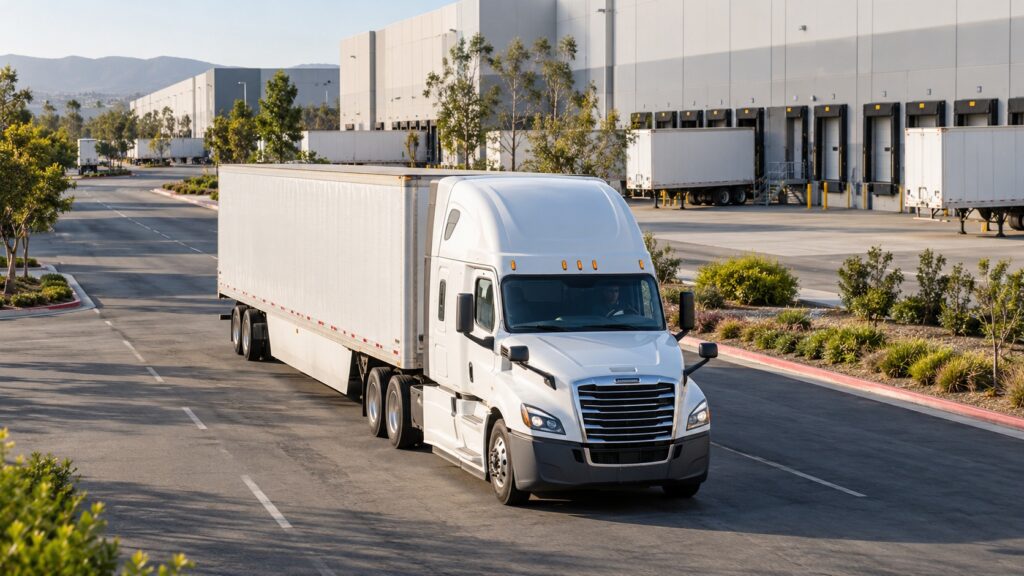
Once a container is released from the port, it can be drayed straight to its final destination or to a nearby warehouse to be stripped and distributed. Direct delivery can work for one container going to one receiver nearby. For suppliers selling into major retailers, devanning at a warehouse near the port usually wins:
- One container, many destinations. Mixed-SKU containers rarely match a single retailer order. Stripped at a warehouse, the cartons can be stored and rebuilt into multi-SKU shipments for several distribution centers, often on milk runs that serve multiple DCs in one route.
- Delivery on the retailer’s schedule. Retailers accept freight in their own delivery windows, not when the vessel arrives. Holding inventory near the port separates the two.
- Faster container turns. A container pulled to a nearby warehouse can be emptied and returned quickly, limiting demurrage and detention exposure.
- A consolidated network. Receiving imports into one operation near the port of entry, instead of splitting containers across regional warehouses, gives a supplier one inventory position and economies of scale on labor and freight.
The Container Devanning Process From Gate to Putaway
Devanning a container well depends less on speed inside the box and more on control before and after it.
Before Arrival: Advance Notice and a Dock Appointment
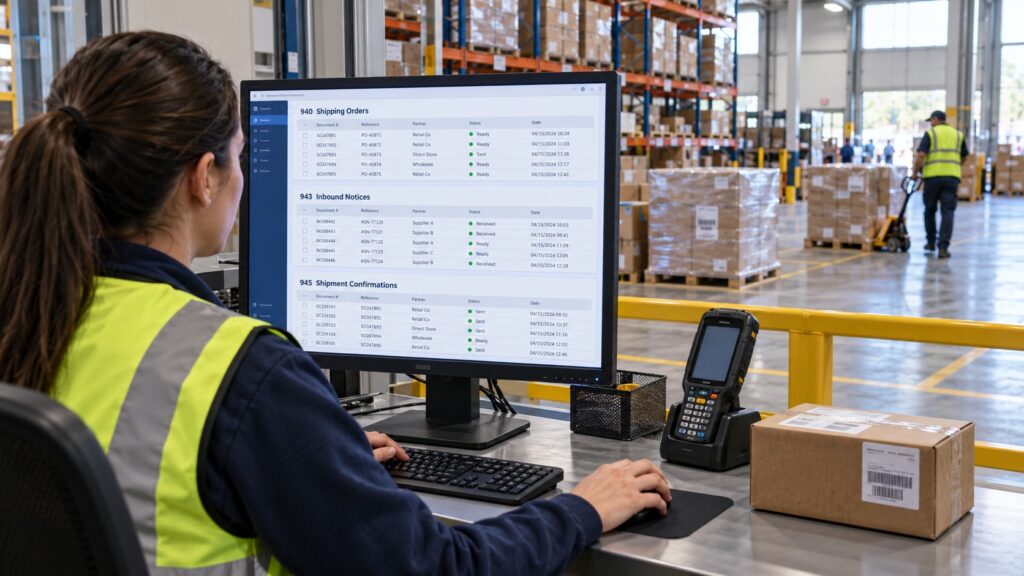
The supplier sends advance notice of what is coming, commonly as an EDI 943 warehouse stock transfer shipment advice, along with the packing list and bill of lading. That tells the warehouse which SKUs, quantities, and purchase orders to expect, so labor, dock doors, and staging lanes can be planned. The drayage carrier books a dock appointment, and containers are sequenced by priority when several arrive at once.
At the Door: Seal Check and Inspection
The team verifies the container and seal numbers against the shipping documents and photographs the doors, seal, and load face before unloading, creating a record if damage or shortages turn up later. Doors are opened carefully, since cargo can shift in transit.
Unloading, Sorting, and Counting
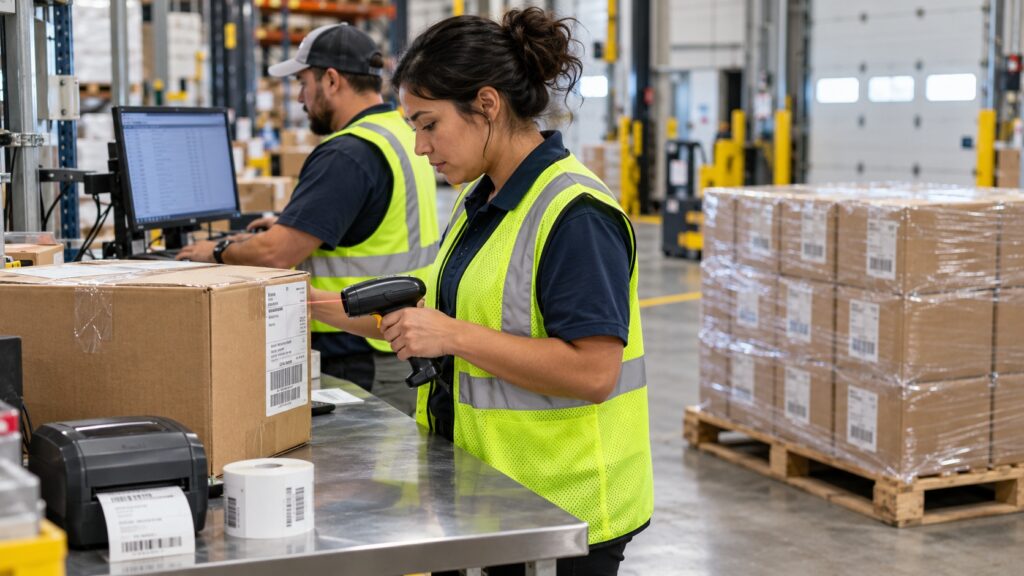
Cartons come off by forklift or by hand, are sorted by SKU (and by purchase order or lot where required), then built into wrapped pallets labeled for tracking in the warehouse management system (WMS). Every carton is counted against the advance notice. Overages, shortages, and damage (OS&D) are documented with photos and reported so claims can be filed while the evidence is fresh, and cartons with missing or incorrect labels are flagged before they reach an outbound order.
Putaway and Container Return
Once counts are confirmed, the receipt closes in the WMS and the inventory becomes available to ship. Pallets go to storage, or straight to outbound staging if they are already allocated to open orders, and the empty container is released for return.
Where Receiving Errors Turn Into Retail Chargebacks
Retailer chargebacks usually land on the outbound side, for short shipments, mislabeled cartons, inaccurate advance ship notices, or missed delivery windows. Many of those failures start at the receiving dock:
- A miscounted receipt leaves the WMS showing stock that is not there, so an order ships short and the ASN no longer matches what arrives at the DC.
- Similar SKUs mixed on one pallet get picked as the wrong item.
- Supplier cartons that miss the retailer’s labeling requirements flow through to the outbound dock unless caught on arrival.
Catching these problems at receiving costs far less than paying for them later. Accurate counts protect the outbound 945 and the 856 ASN built from it, and noncompliant cartons can be relabeled or reworked before they ship. For the wider picture, see how chargebacks fit into the retail fulfillment process.
What Drives Devanning Fees and Container Turn Times
A devanning fee is the charge for unloading a container and preparing its contents for storage or shipment. It is usually priced per container and follows the labor involved: floor-loaded containers cost more than palletized ones, and carton count, carton weight, SKU mix, and container size (a 40-foot high-cube holds far more cartons than a 20-foot) all move the rate. Pallets, wrap, and relabeling may be billed separately.
Turn time matters as much as the fee. A crew can usually empty a floor-loaded container within a few hours, while the full receipt, with counts, audits, and putaway, takes longer. Every day a container waits adds exposure to demurrage and detention charges, which are easy to confuse:
- Demurrage is charged when a loaded container stays at the terminal past its free time.
- Detention is charged when a container is kept outside the terminal past its free time before being returned empty.
Free time and daily rates vary by carrier and port, so prompt receiving after pickup is one of the simplest ways to keep both off the invoice.
Choosing a 3PL for Container Devanning at Scale
For a mature import program, the question is whether a 3PL can receive a steady flow of containers accurately, week after week and through peak. Look at:
- Proximity to the port of entry, which keeps drayage short and container turns fast.
- Dock capacity and appointment discipline, so containers are received in priority order instead of waiting in the yard.
- The crew. Handballing is skilled, physical work, and a trained, stable, full-time crew sorts and counts more accurately than a rotating temporary workforce.
- Systems and reporting: a WMS and in-house EDI that take in the 943, document OS&D, and make receipts visible to you quickly.
- What happens after receiving: the ability to store inventory and build compliant multi-SKU shipments to multiple retailer DCs, in a building shared by a few large accounts rather than dozens.
Container Devanning FAQs
What is devanning?
Devanning is the process of unloading cargo from a shipping container once it reaches its destination, usually a warehouse, distribution center, or container freight station. It is also called container stripping, destuffing, or unstuffing. Depending on how the container was loaded, devanning can mean pulling pallets out with a forklift or hand-unloading loose cartons, sorting them by SKU, and building pallets on the dock.
What does devanned mean on a container tracking update?
A container marked as devanned has been unloaded at its destination. The cargo is out of the container, and the empty unit is ready to be returned to the ocean carrier or its depot. For the importer, the devanned status is a useful checkpoint: receiving is underway, and the container can now be returned, which stops further detention charges from building up.
How long does it take to devan a container?
Most containers can be emptied within a few hours, but the time depends on how they were loaded. Palletized freight unloads quickly with a forklift. A floor-loaded container takes longer because every carton is handled by hand, and carton count, carton weight, and the number of SKUs to sort all add time. Counting, auditing, and putting the inventory away usually takes longer than the unloading itself.
What is a devanning fee?
A devanning fee is the charge a warehouse or 3PL bills for unloading a container and preparing its contents for storage or shipment. It is usually priced per container. Floor-loaded containers cost more than palletized ones because of the hand labor involved, and carton count, carton weight, SKU mix, and container size all affect the rate. Pallets, wrap, and relabeling may be billed separately.
What is the difference between devanning and transloading?
Devanning is unloading a container at its destination, typically so the goods can be received into a warehouse. Transloading moves the contents of an ocean container into a domestic trailer, usually a 53-foot dry van, so the freight can continue inland. Every transload includes devanning, but not every devanned container is transloaded: many are received into storage and shipped out later as separate orders.
Looking for a Partner to Receive Your Port Containers?
Receiving port containers and turning them into accurate, retailer-ready shipments is the work ACT Fulfillment built its business on. For more than 30 years, ACT has supported suppliers selling into major retailers, with warehouses in Southern California’s Inland Empire within drayage range of the Ports of Los Angeles and Long Beach. In-house EDI means inbound 943s stage the floor before a container arrives, receipts are recorded in a cloud-based, RF-driven WMS, and receipt status is visible in the customer portal by your own PO numbers. Because ACT is employee-owned, the people receiving your containers own part of the company. Talk to ACT about your import program, or explore our B2B fulfillment services.