TL;DR
- Retail fulfillment is the process of getting a brand’s products onto retailers’ shelves and to shoppers, spanning bulk shipments into retailers’ distribution centers, direct-to-consumer orders, and omnichannel demand.
- What makes retail fulfillment demanding is retailer compliance: strict routing guides, EDI requirements, labeling standards, and delivery windows, where a single miss can trigger costly chargebacks.
- Strong retail fulfillment depends on compliance discipline, inventory positioned near customers and retailer DCs, and the labor and omnichannel systems to scale through peak.
What Is Retail Fulfillment and What Does It Cover?
Retail fulfillment is the process of getting a brand’s products from the warehouse onto retailers’ shelves and into customers’ hands. The term is used two ways. For suppliers, it means shipping products in bulk, by case and pallet, into a retailer’s distribution centers or stores, where they are then sold to shoppers. For direct-to-consumer brands, it means picking, packing, and shipping individual retail orders placed online. Most growing brands eventually do both, which is why retail fulfillment increasingly means omnichannel: serving retail, ecommerce, and marketplace orders from the same inventory.
What sets retail fulfillment apart from standard ecommerce fulfillment is the retailer’s rules, strict routing guides, labeling standards, EDI requirements, and delivery windows, where missing any one can trigger financial penalties. That compliance layer, more than the picking and packing itself, is what makes retail fulfillment demanding.
How an Efficient Retail Fulfillment Process Works Step by Step
Every retailer is different, but the retail fulfillment process follows a consistent path, tracked end to end in a warehouse management system that keeps inventory accurate and gives both the brand and the retailer visibility into what shipped and when.
Step 1: Receiving and Storing Inventory
Goods are checked in, documented, and slotted so they can move quickly later. Accurate receiving is what makes everything downstream, from order accuracy to on-time shipping, possible.
Step 2: Picking, Packing, and Labeling
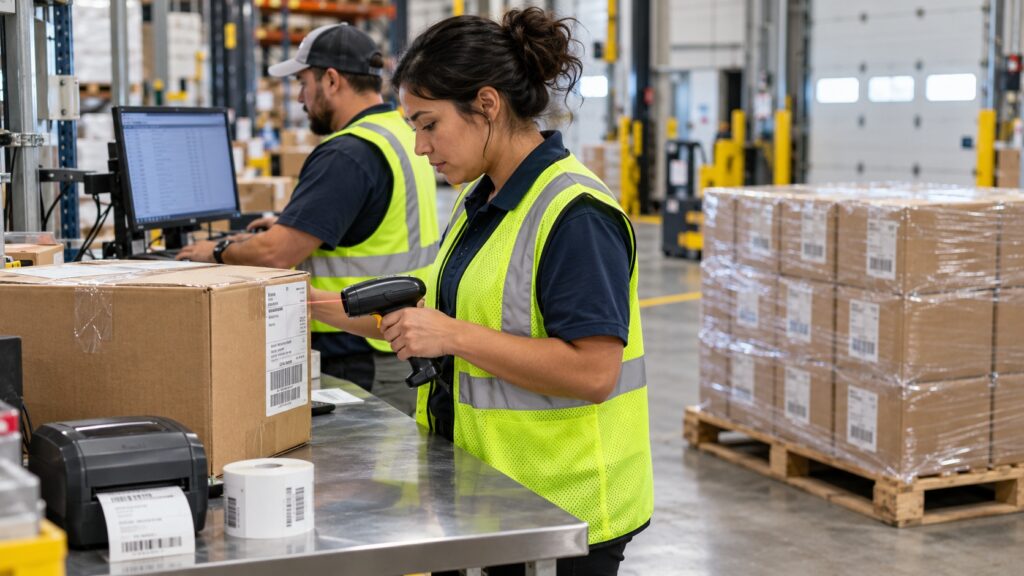
When an order comes in, whether a bulk purchase order from a retailer or an individual order from a shopper, the warehouse generates a pick list, and the items are picked, packed, and labeled to spec.
Step 3: Shipping Into Retailer Distribution Centers
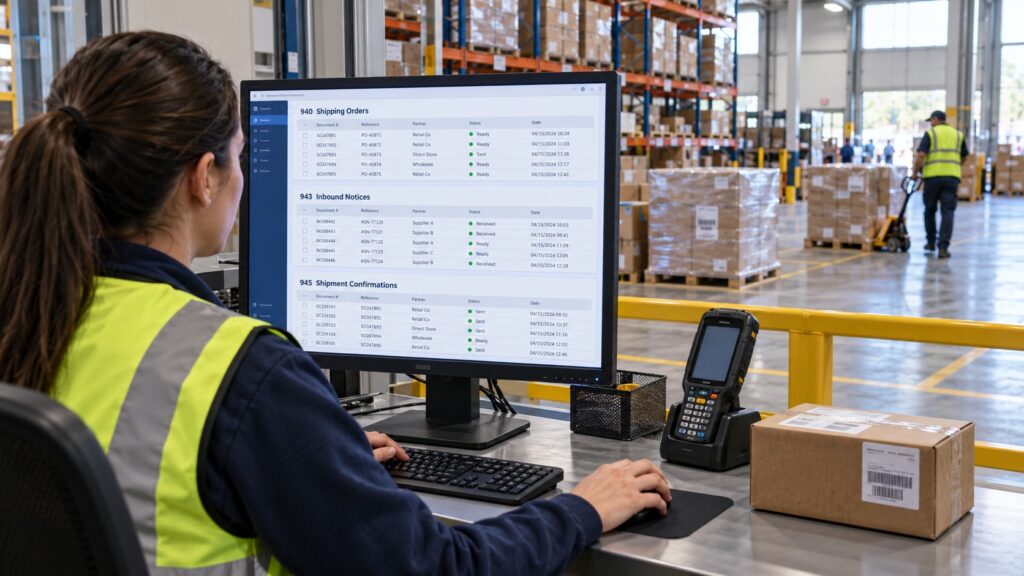
For orders headed into a retailer’s distribution centers, this is where the compliance work happens. The retailer’s routing guide dictates how products are palletized, labeled, and cartonized, while orders and shipment data move through EDI: the retailer sends a purchase order and expects an advance ship notice in return, while the warehouse runs its own transaction sets, such as the 943 and 945, to record goods moving in and out. Freight is booked into a specific delivery window, since arriving late or unannounced is a common cause of chargebacks.
Step 4: Fulfilling Direct-to-Consumer Orders and Returns
For direct-to-consumer and dropship orders, the flow ends at the shopper’s door, often under the retailer’s name. Returns then move back through reverse logistics to be inspected and restocked, closing the loop.
Common Retail Fulfillment Challenges to Plan For
The stakes in retail fulfillment are higher than in standard direct-to-consumer shipping, and a few challenges come up again and again.
Chargebacks
Retailers issue these financial penalties when a shipment misses a delivery window, is mislabeled or mis-packed, arrives short or over, or lacks the right EDI confirmation. On a large purchase order, they add up fast.
Vendor Scorecards
Most major retailers grade suppliers on metrics like on-time, in-full delivery. A poor score can quietly cost you shelf space, which makes consistency as important as any single shipment.
Sudden Volume Spikes
Landing a retail account can multiply your order volume overnight, which strains any operation that cannot flex its labor and space for the spike.
Managing Multiple Retailers
Every retailer has its own routing guide and EDI setup, so serving several at once means juggling multiple sets of rules and connections, each with its own quirks.
Seasonal Peaks and Returns
Demand swings hard around peak, omnichannel inventory has to be tracked across channels, and a steady stream of returns needs processing, all of which reward experience and disciplined systems.
Strategies for a Stronger Retail Fulfillment Operation
Strong retail fulfillment comes down to discipline in a few areas.
Get Compliance Right at the Source
Handling EDI in-house, building routing-guide requirements into the pick-and-pack process, and sending accurate advance ship notices prevents most chargebacks before they happen. Value-added services like retailer-specific labeling, re-ticketing, and repackaging keep shipments compliant as requirements change.
Position Inventory Strategically
Placing stock near your customers and the retailer DCs you serve shortens transit times and cuts freight costs, and a provider with reach across major markets gives you room to grow. Pair that with a warehouse management system and real-time visibility, so you and your retail partners always know what is on hand and what shipped.
Plan for Peak and Omnichannel Demand
The operations that avoid chargebacks in the busiest weeks are the ones with the labor and space to scale, backed by omnichannel systems that manage every channel from one pool of inventory. For many brands, the most reliable strategy is partnering with a 3PL that already runs retail programs and knows the compliance rules cold.
Retail Fulfillment FAQs
What is retail fulfillment?
Retail fulfillment is the process of getting a brand’s products onto retailers’ shelves and into customers’ hands. For suppliers, that means shipping goods in bulk into a retailer’s distribution centers or stores. For direct-to-consumer brands, it means picking, packing, and shipping individual online orders. Many brands do both, so retail fulfillment increasingly spans retail, ecommerce, and marketplace channels at once.
What is the difference between retail fulfillment and ecommerce fulfillment?
Ecommerce fulfillment handles individual orders shipped straight to online shoppers. Retail fulfillment is broader and usually more demanding, it includes shipping products in bulk into retailers’ distribution centers and stores, which means meeting strict routing guides, labeling rules, EDI requirements, and delivery windows. Retail orders are larger and carry financial penalties for mistakes, so they take more precision than standard direct-to-consumer shipping.
What is a routing guide in retail fulfillment?
A routing guide is a retailer’s set of rules for how suppliers must ship to them. It specifies pallet configurations, carton labeling, packaging, documentation, and the exact delivery windows and dock procedures to follow. Every major retailer has its own, and following it precisely is what keeps shipments compliant. Missing even small details is one of the most common triggers for chargebacks.
What are retail chargebacks, and how do you avoid them?
Chargebacks are penalties retailers charge when a shipment breaks their rules, such as missing a delivery window, mislabeling or mis-packing, shipping short or over, or failing to send the right EDI confirmation. On large orders they add up quickly. The best way to avoid them is disciplined compliance: accurate labeling, correct advance ship notices, and on-time delivery from a team that knows each retailer’s requirements.
What role does EDI play in retail fulfillment?
EDI (electronic data interchange) is how retailers and their suppliers exchange documents electronically, from the purchase order a retailer sends to the advance ship notice a supplier returns. On the warehouse side, a 3PL runs its own transaction sets, such as the 943 and 945, to record goods moving in and out. Setting up EDI can take weeks, so a provider that handles it in-house and already connects to major retailers shortens onboarding and reduces the errors that lead to chargebacks.
What is a retail fulfillment center?
A retail fulfillment center is a warehouse set up to receive, store, and ship products for retail programs. It handles bulk shipments into retailers’ distribution centers, direct-to-consumer orders, or both, along with the labeling, palletizing, and EDI needed to stay compliant. The strongest ones combine a warehouse management system, real-time inventory visibility, and the labor to scale through peak season.
When should a brand outsource retail fulfillment to a 3PL?
The moment you land a retail account is a good time to consider a 3PL, especially if order volume is about to jump. Retail fulfillment demands routing-guide expertise, EDI connections, and compliance discipline that most in-house teams cannot build quickly. A 3PL that already runs retail programs can hit those requirements from the start, protecting the retail relationship you worked to win.
What is omnichannel retail fulfillment?
Omnichannel retail fulfillment means serving every sales channel, retail, ecommerce, and marketplace, from one pool of inventory. Instead of holding separate stock for each channel, orders are fulfilled from shared inventory with connected systems, so a product can ship to a retailer’s DC, a shopper’s door, or a marketplace order without silos. It gives brands cleaner inventory data and more flexibility as demand shifts between channels.
Looking for a Retail Fulfillment Partner You Can Trust?
Retail is where ACT Fulfillment built its reputation over more than 30 years, running case and pallet programs into major retailers’ distribution centers alongside ecommerce, dropship, and omnichannel orders. With in-house EDI, retailer-specific value-added services, and real-time visibility, we keep shipments compliant and chargebacks down. Because we are employee-owned, the people running your account own part of the company. Talk to ACT about retail fulfillment or explore our B2B and omnichannel fulfillment services.