TL;DR
- Milk run logistics uses one truck on a planned, recurring route to make several pickups or deliveries, instead of sending a separate shipment to each location.
- For suppliers selling into major retailers, the outbound version matters most: multi-SKU cartons built at one warehouse and delivered to several retailer distribution centers on a single trailer.
- A milk run only pays off when volume is forecastable, the stops sit close together, and the warehouse, broker, and carrier work to the same appointment plan.
Milk run logistics is a transportation method in which one vehicle follows a fixed, scheduled route with multiple stops, consolidating loads that would otherwise travel as separate shipments. In everyday use, the milk run meaning is simply a routine trip with many stops; in logistics, the stops are suppliers, plants, or distribution centers.
For a retail supplier, the useful picture is outbound: a port container is received and stored, and its cartons leave as multi-SKU shipments for several retailer DCs on one route. How well that route is planned decides freight cost, on-time delivery, and how many compliance penalties follow.
Inbound, Outbound, and In-Plant Milk Runs Compared
Milk runs take three common forms:
- Inbound milk runs. One truck collects partial loads from several suppliers and delivers them to a single plant or warehouse.
- Outbound milk runs. One truck leaves a warehouse with orders for several destinations, such as retailer DCs or stores, and drops them in a set sequence.
- In-plant milk runs. A tugger or cart loops through a factory or warehouse on a timetable, replenishing workstations. This is a lean manufacturing tool rather than freight.
Retail suppliers mostly run outbound milk runs. The rest of this article focuses on them.
How a Retail Milk Run Works, From Container to DC Dock
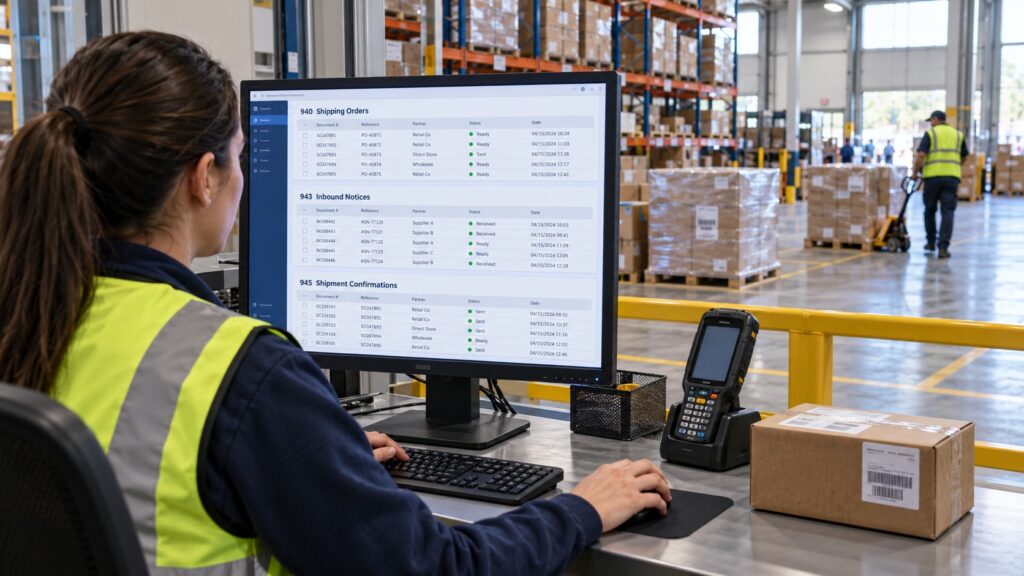
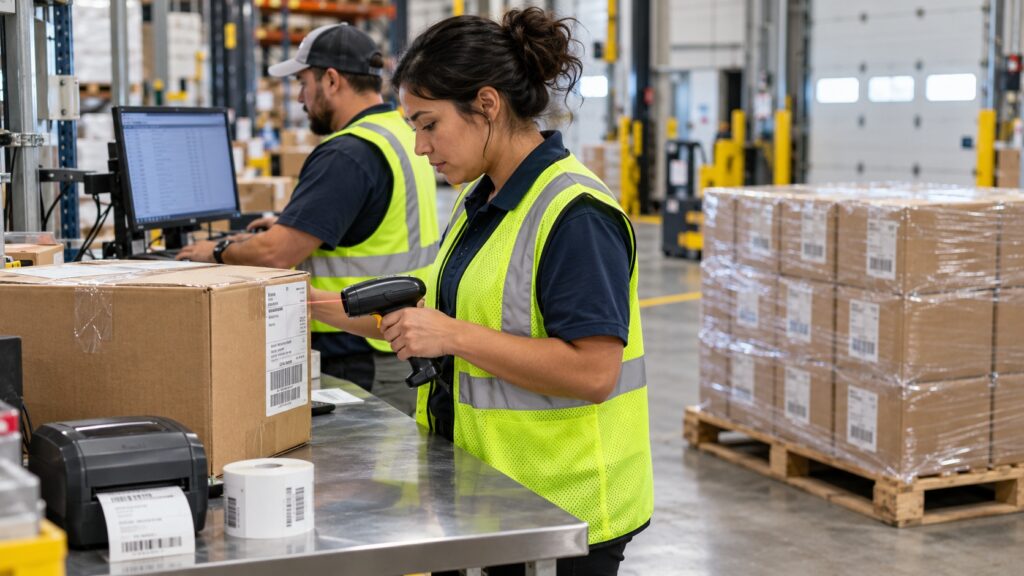
A retail milk run starts long before the truck arrives. Imports are devanned and received into inventory, so stock is counted by SKU and ready to allocate. Each retailer’s purchase orders are then picked, labeled to its requirements, and staged by destination.
Load building is where milk runs differ from single-stop freight. Orders are loaded in reverse stop order, so the first delivery sits at the doors and the last sits at the nose of the trailer. Each DC’s freight stays clearly separated, with its own bill of lading and pallet labels, so one receiver never unloads another retailer’s cartons. The advance ship notice (ASN) for every stop has to match exactly what is on the trailer for that DC.
Finally, each stop needs its own delivery appointment, and the appointments have to fit the drive time between DCs. A route that looks efficient on a map fails if two DCs only offer overlapping windows.
When Milk Runs Beat Direct LTL and Full Truckload Shipping
A milk run sits between two familiar options. Less-than-truckload (LTL) freight moves through a carrier’s terminal network, where it is unloaded and reloaded on the way to the DC. Each extra touch adds transit time and damage risk. A full truckload to one DC is simple, but only when a single order can fill the trailer.
Milk runs win when several DCs each need more than a few pallets but less than a full trailer, and when those DCs sit along a sensible route. The freight stays on one trailer from dock to dock, and the line-haul cost is shared across every stop. This is where economies of scale show up in transport: the more consistent volume a supplier ships from one origin, the easier it is to fill trailers and spread fixed costs.
The trade-offs are real. Carriers usually charge for each extra stop, and every stop adds time and the chance of a delay. When one destination grows large enough to fill a truck on its own, it should move to dedicated transport rather than stay on the route.
Forecasting the Volume That Keeps a Milk Run Route Full
A milk run is a standing plan, not a one-off load, so it depends on forecasts. If retailer orders swing widely, trailers run half empty or freight spills onto extra trucks at short notice, and the savings disappear.
Suppliers that run milk runs well share retailer forecasts with their warehouse early, so labor, dock doors, and trucks can be planned around regular ship days. Reviewing actual volume by DC against the route each quarter shows when a stop should be added, dropped, or moved to its own truckload.
One Origin, Many DCs: Consolidating the Network Behind a Route
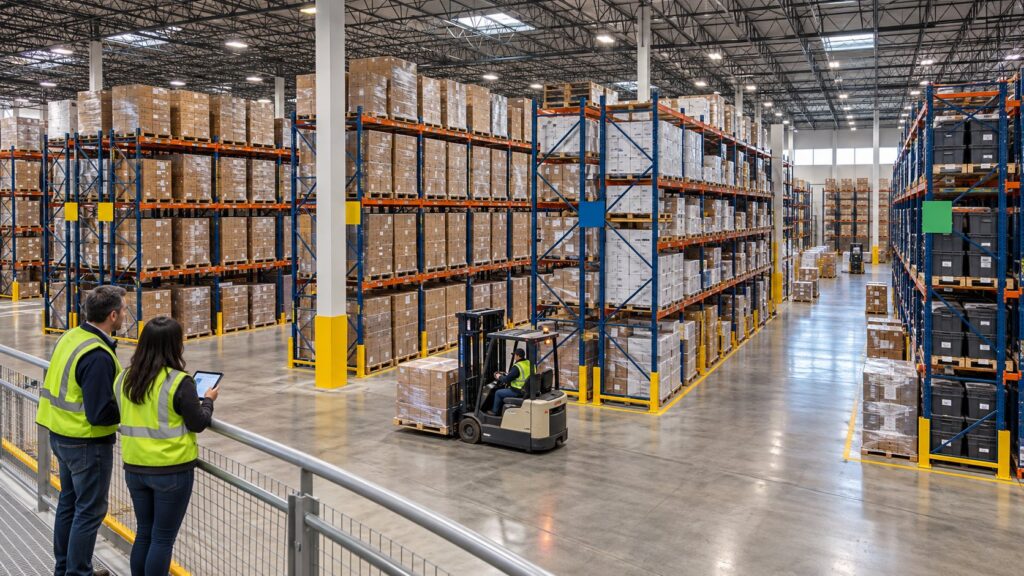
Milk runs need density, and density comes from shipping out of one place. Inventory scattered across several warehouses produces small orders that rarely fill a trailer; bringing it into one location gives a single origin enough combined volume for efficient multi-stop routes.
The building matters as well. A warehouse shared by a small number of large accounts tends to give each one steadier dock access than one crowded with dozens of clients (see dedicated vs shared warehousing). For milk runs, predictable dock time is what keeps a loaded trailer leaving on schedule.
Who Runs the Trucks: Roles of the 3PL, Broker, and Carrier
A milk run is an integrated partnership with three distinct roles:
- The warehouse or 3PL picks, labels, sequences, and loads the freight, sends the ASNs, and holds the shipping records.
- The freight broker finds and books qualified carriers for multi-stop loads, negotiates stop charges, and coordinates appointments.
- The carrier owns the truck and driver and is responsible for running the route and delivering on time.
Many 3PLs do not operate a fleet. ACT Fulfillment, for example, arranges transportation through brokerage, so carriers run the trucks while ACT builds and documents each load. Some retailers also control inbound freight through their routing guides and assign their own carriers. In that case, the warehouse still owns load quality and paperwork, even though the retailer picks the truck.
What Breaks a Milk Run, and How to Keep Routes on Schedule
Because every stop depends on the one before it, small problems compound. The most common failures are:
- A missed or late appointment early in the route, which pushes back every stop after it.
- Freight loaded out of sequence, so drivers have to shift pallets at a dock.
- An ASN that does not match the cartons delivered at a DC.
- Labels or pallet builds that break one retailer’s routing guide.
Each of these can trigger fines or deductions, the same causes behind most retailer chargebacks. The fix is a pre-departure audit of sequence, labels, and paperwork by stop, plus live tracking, so a delay at one DC is reported to the next before it becomes a missed window.
Milk Run Logistics FAQs
Why is it called a milk run?
The term comes from dairy routes, where one vehicle collected milk from several farms, or delivered bottles to many homes, on the same schedule every day. During World War II, aircrews also used milk run as slang for a routine, low-risk mission. Logistics borrowed the first meaning: a regular, repeatable route with many stops. The two origins are often blended together, but they are separate uses of the same phrase.
Is a milk run the same as LTL shipping?
No. LTL freight moves through a carrier’s terminal network and is usually unloaded and reloaded at least once before delivery, with pricing per shipment. A milk run is typically a multi-stop truckload: freight for several destinations is loaded once, stays on the same trailer, and comes off only at its own stop. That means fewer touches and more predictable transit, but it requires enough combined volume to justify the truck.
What is a stop-off charge?
A stop-off charge is a fee a carrier adds for each stop on a truckload beyond the first pickup and final delivery. It covers the extra driver time, mileage, and scheduling involved. Rates vary by carrier, lane, and market, so they should be confirmed when the load is quoted. On a milk run, stop-off charges are one reason routes work best with a limited number of closely grouped destinations.
What is the difference between a milk run and cross-docking?
Cross-docking moves freight through a facility with little or no storage: inbound shipments are unloaded, sorted, and loaded onto outbound trucks, usually within a day. A milk run is a transportation route, not a facility process. The two often work together. A warehouse might cross-dock or store goods and then send them out on a milk run that delivers to several distribution centers.
Do retailers accept milk run deliveries to their DCs?
Often, but it depends on each retailer’s routing guide. Some let suppliers ship prepaid multi-stop loads as long as each delivery has its own appointment, paperwork, and correctly labeled freight. Others control inbound freight themselves and assign carriers, which limits how a supplier can combine stops. Checking the current routing guide for every retailer on the route is the first step before planning a milk run.
Looking for a Partner for Multi-DC Retail Distribution?
Turning port containers into accurate, retailer-ready shipments for several distribution centers is the kind of work ACT Fulfillment is built around. For more than 30 years, ACT has supported suppliers selling into major retailers from warehouses in Southern California’s Inland Empire. Orders are picked at case, pallet, or store level in a fully RF-driven process on a cloud-based WMS with in-house EDI, transportation is arranged through brokerage, and BOLs and PODs are available in the customer portal. Because ACT is employee-owned, the people building your loads own part of the company.
Talk to ACT about your retail distribution program, or explore our B2B fulfillment services.