TL;DR
- Contract logistics is the long-term, contract-based outsourcing of your logistics operations to a provider that dedicates resources and tailors its processes to your business, managing the flow of goods rather than just storing them.
- The main difference from a standard 3PL is depth: contract logistics uses dedicated resources, deep system integration, and longer agreements, while a 3PL offers flexible, shared, transactional services you can scale up or down.
- Contract logistics fits high, steady volumes and complex or regulated operations that need dedicated capacity, while businesses with variable demand or early-stage growth are usually better served by a flexible 3PL.
What Is Contract Logistics and How Does It Work?
Contract logistics is the outsourcing of your logistics operations to a specialized provider under a long-term, contractual agreement. Rather than one-off tasks, the provider manages a defined part of your supply chain end to end, with dedicated resources, tailored processes, and deep integration into how your business runs. The word contract signals the relationship itself: an ongoing partnership, not a transaction.
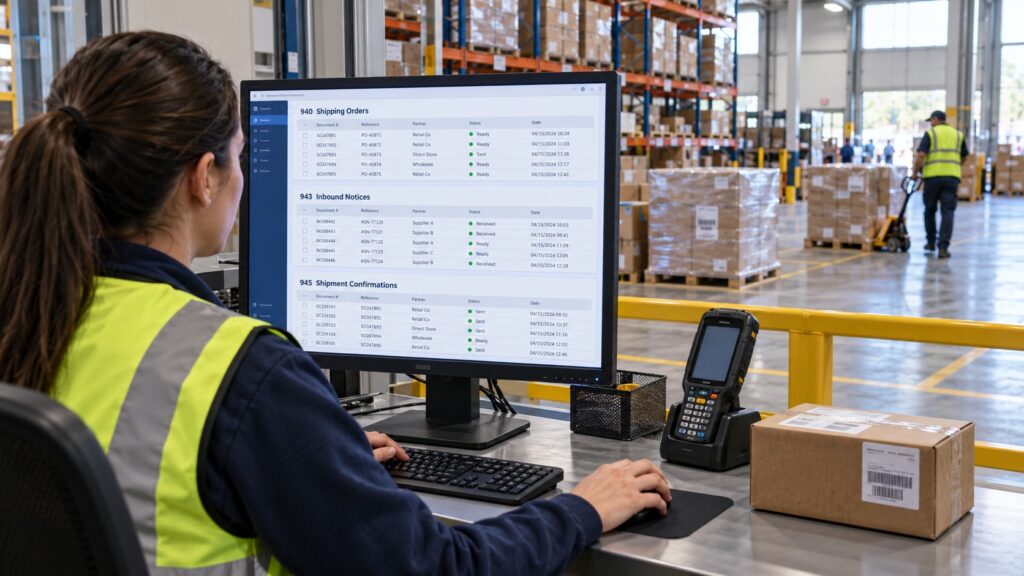
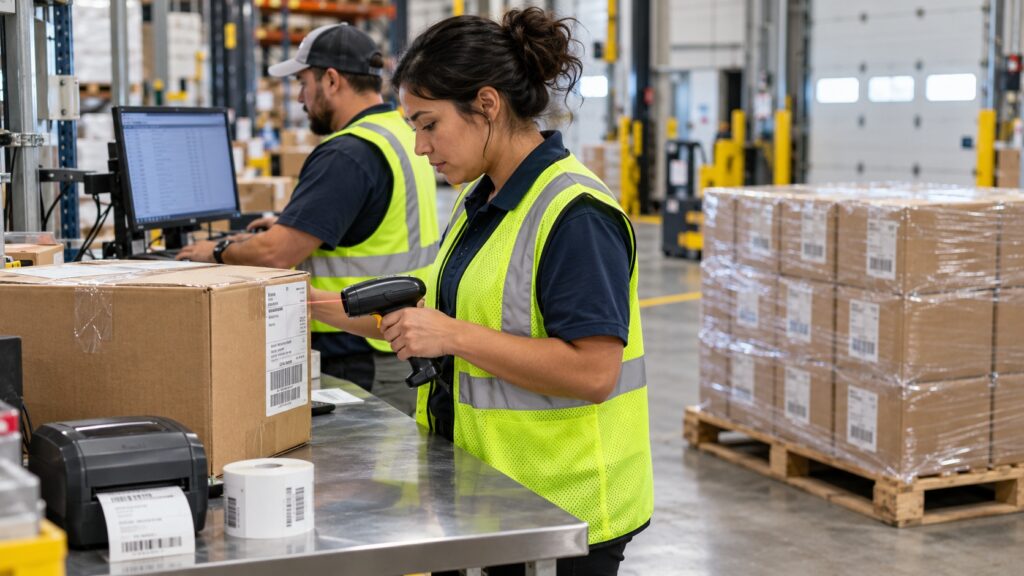
In practice, it covers warehousing and inventory management, order fulfillment, distribution, returns, and value-added services like kitting, labeling, and repackaging, plus arranging transportation. The emphasis is on managing the flow of inventory, receiving it, processing it, and pushing it back out accurately and on time, rather than simply storing it. Technology ties it together, with a warehouse management system and real-time visibility keeping inventory and orders on track.
Contract Logistics vs 3PL: What Is the Difference?
Contract logistics and third-party logistics (3PL) are often used interchangeably, and they overlap heavily, but they are not identical. The clearest way to think about it is that contract logistics is a dedicated, long-term form of the broader 3PL relationship.
A standard 3PL offers individual, standardized services to many clients at once, using shared space, systems, and labor. That keeps things flexible and cost-effective, and you can scale up or down without a major commitment. Contract logistics sits at the dedicated end of the spectrum: resources are committed to your account, processes are customized to your products, systems integrate deeply with yours, and the agreement runs longer, often several years. Pricing follows suit, with 3PL services tending to be transactional and variable while contract logistics leans toward fixed or management-based fees that make costs more predictable.
The practical difference is depth and commitment. A 3PL is operational support you can adjust as needs change, while a contract logistics provider becomes a strategic partner that works like an extension of your team. Many providers, ACT included, offer both, so the right structure depends on your volume, complexity, and how much dedicated capacity you need.
What Are the Key Benefits of Contract Logistics?
The benefits of contract logistics all flow from one thing: dedicated resources committed to your operation.
Predictable, Dedicated Capacity
Because the provider commits specific resources to your account, you get consistent throughput built around your operation, rather than shared capacity you compete for with hundreds of other clients.
Deeper Expertise and Continuity
A dedicated team learns your products, your customers, and your quirks over time, building the category expertise and continuity that a transactional, high-turnover arrangement rarely matches.
Lower Cost and Risk
You avoid the cost and risk of building and staffing your own warehouses, and you gain established technology and reporting without the capital outlay.
Room to Scale Through Peak
You can flex capacity for seasonal peaks with a partner that has already planned for them, instead of scrambling for space and labor when volume spikes.
Cleaner Data and More Focus
Deep system integration means cleaner inventory data and fewer manual fixes, and handing off day-to-day logistics frees your team to focus on product, sales, and growth.
When Does Contract Logistics Make Sense for You?
The right model depends on your volume, your complexity, and how much dedicated capacity you need.
When Contract Logistics Is the Right Fit
Contract logistics tends to pay off when your volume is high and steady enough to keep dedicated resources busy, and your operation is complex enough that shared, standardized services fall short. [Retail suppliers](https://www.actfulfillment.com/b2b-fulfillment-services/) feeding distribution centers, brands with heavy value-added or compliance requirements, and regulated categories like food-grade or cosmetics often fit this profile. If you need guaranteed peak capacity, deep customization, or tight system integration, a dedicated arrangement is usually worth the commitment.
When a Standard 3PL Makes More Sense
If your volumes swing unpredictably, you are early in your growth, or you mainly need flexibility, a standard 3PL may serve you better. The two are not mutually exclusive: many businesses run dedicated contract operations for their core, predictable volume and use flexible 3PL capacity for the rest. The right choice comes down to matching the structure to how your business actually runs.
Contract Logistics FAQs
What is contract logistics?
Contract logistics is the outsourcing of your logistics operations to a specialist provider under a long-term agreement. Instead of one-off services, you get dedicated resources and customized processes that manage a defined part of your supply chain, from warehousing and fulfillment to distribution and returns, with the provider working as an extension of your business.
What is the difference between contract logistics and 3PL?
The difference is depth and commitment. A standard 3PL offers flexible, standardized services across many clients using shared space and systems, on shorter, transactional terms. Contract logistics dedicates resources to your account, customizes processes, integrates deeply with your systems, and runs longer with more predictable pricing. It is best seen as a dedicated form of 3PL, not a separate category.
Is contract logistics the same as contract warehousing?
No. Contract warehousing refers to dedicated storage space and the handling around it. Contract logistics is broader, covering warehousing plus inventory management, fulfillment, distribution, returns, value-added services, and arranging transportation. In short, contract warehousing is about where inventory sits, while contract logistics is about managing the full flow of goods through your supply chain.
Is contract logistics cheaper than a 3PL?
It depends on your volume. Contract logistics usually carries a higher, more fixed cost because you pay for dedicated resources, but at high, steady volumes those resources are used efficiently and can beat a transactional 3PL on unit cost. A standard 3PL is cheaper to start and better for variable or lower volumes. Judge total cost over time, not the starting rate.
Does contract logistics include transportation?
Usually, yes. Arranging or managing transportation is a common part of contract logistics, alongside warehousing, fulfillment, and distribution. Providers handle it differently, though: some own fleets, while many arrange and broker transportation through carrier partners rather than running their own trucks, letting you hand warehousing, fulfillment, and freight coordination to a single partner.
When does contract logistics make sense for a business?
It makes sense when your volume is high and steady enough to keep dedicated resources busy, and your operation is too complex for standardized, shared services. Retail suppliers, brands with heavy value-added or compliance needs, and regulated categories like food-grade or cosmetics are common fits. If you need guaranteed peak capacity, deep customization, or tight integration, it is usually worth the commitment.
Is contract logistics right for a small business?
Often not, at least early on. Contract logistics is built around dedicated resources and long-term commitment, which suits higher, predictable volumes rather than fluctuating ones. A smaller or fast-changing business usually gets more value from a flexible 3PL, paying only for what it uses. As volume grows larger and steadier, a dedicated arrangement can start to pay off.
What industries use contract logistics?
Contract logistics is common in industries with high volumes, complex handling, or strict compliance needs. Retail and consumer goods, apparel and footwear, electronics, automotive, and regulated categories like food-grade products and cosmetics all rely on it. These sectors benefit from dedicated capacity, specialized handling, and providers that understand their routing, labeling, and compliance requirements.
Looking for a Contract Logistics Partner That Delivers?
ACT Fulfillment has run dedicated, managed logistics operations for retail suppliers and B2B brands for more than 30 years. Because we are employee-owned, the people running your account own part of the company, so we work like a true extension of your team. From warehousing and fulfillment to in-house EDI, value-added services, and real-time visibility, we build the operation around your products and volume. Talk to ACT about contract logistics or explore our 3PL and fulfillment services.