TL;DR
- 3PL logistics involves outsourcing warehousing, fulfillment, transportation, returns, and other supply chain operations to a specialized provider.
- Businesses use 3PLs to reduce infrastructure costs, scale capacity with demand, access advanced technology, and improve operational visibility.
- A 3PL can also support regulatory compliance, faster market expansion, more consistent service, and value-added logistics processes.
- Brands such as Levi’s, SharkNinja, and NEXT demonstrate how third-party logistics networks can lower costs and support large-scale domestic and international growth.
Managing a supply chain in-house works – until it doesn’t.
As businesses grow, the complexity of warehousing, shipping, and returns quickly outpaces internal capacity. That’s where 3PL logistics comes in.
What Is 3PL Logistics?
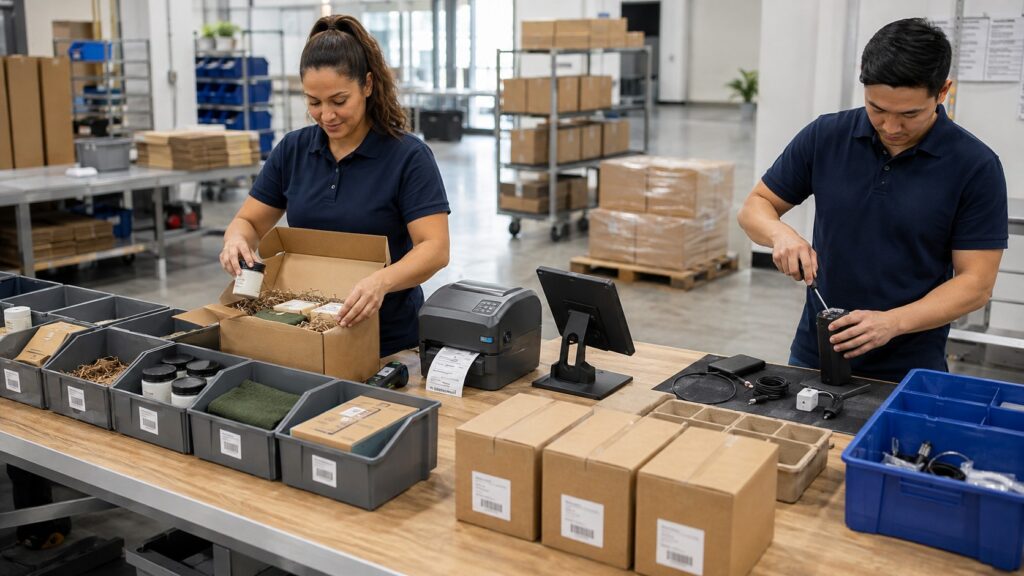
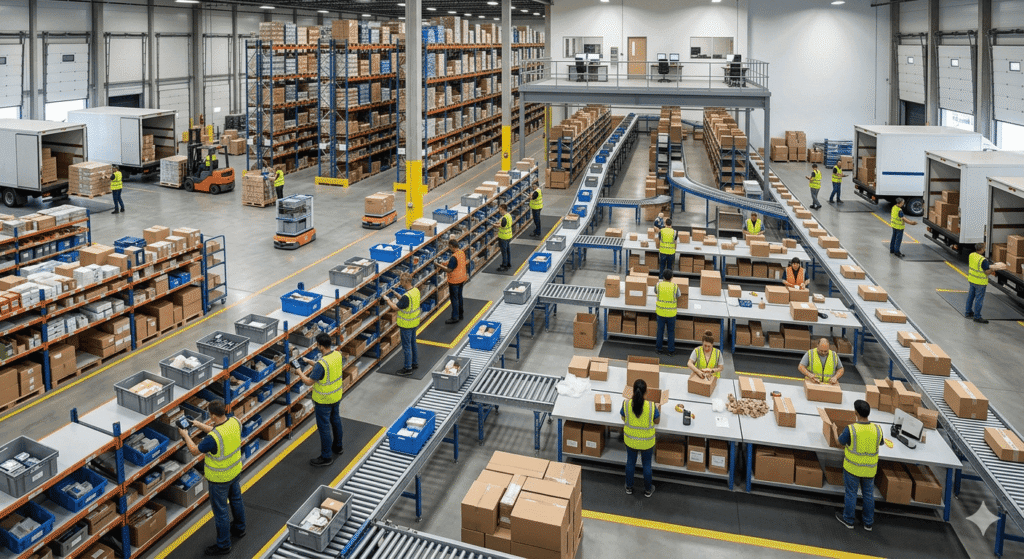
3PL logistics is the outsourcing of supply chain operations, such as warehousing, order fulfillment, transportation, and returns, to a specialized third-party provider. Rather than managing these operations in-house, businesses partner with a 3PL that has the infrastructure, expertise, and technology to run them efficiently and at scale.
Integrated Into Supply Chain Operations
3PL services function as an extension of a company’s own team, integrating into its supply chain rather than operating separately.
In practice, this means a 3PL can connect with a business’s existing systems to receive orders, update inventory, coordinate shipping, and keep the wider logistics operation moving with less internal effort.
This gives businesses clearer operational visibility without forcing them to build, staff, or manage the systems and processes behind the full logistics workflow.
Why Businesses Use 3rd Party Logistics Providers
3PLs help organizations create a leaner, more agile operation. By outsourcing logistics to a specialized provider, they can scale more flexibly as demand shifts and make more informed operational decisions, whether that means handling seasonal spikes, entering new markets, or managing complex product recalls.
Benefits of 3PL Logistics
The advantages of 3PL logistics extend beyond outsourcing day-to-day fulfillment.
Cost Efficiency
With a 3PL partner, businesses reduce the heavy upfront investment required to own and maintain logistics infrastructure or to hire a dedicated logistics team.
More than that, they can also benefit from their provider’s scale. For example, because 3PLs move high volumes of freight, they can often negotiate lower carrier rates than a single brand could secure on its own. These savings can then be passed on to clients.
Scalability & Flexibility
A 3PL gives businesses more room to adjust as demand changes. It helps, for instance, avoid paying for unused space during slower periods, while also reducing the risk that limited physical equipment, warehouse capacity, or available drivers become bottlenecks during busy periods.
Advanced Technology
3rd-party logistics offers access to state-of-the-art technology, including Warehouse Management Systems (WMS), Transportation Management Systems (TMS), and other tools that automate and optimize workflows while reducing errors throughout the logistics process.
Operational Visibility
3PL technology also gives businesses clearer control over logistics performance. Thanks to advanced, connected systems, companies gain clearer visibility into the entire operation by tracking inventory levels, order status, and stock movement in real time.
This visibility often extends into operational data, providing insights into inventory turnover and customer buying patterns that give them a clearer picture of where delays, inefficiencies, or improvement opportunities exist across their supply chain.
Logistics Expertise
3PLs bring years of expertise and specialized knowledge and can efficiently serve as an extension of the brand without making logistics an internal burden.
They also help with compliance for specialized or regulated items, such as bulky goods, temperature-sensitive products, hazardous materials, and similar product types, helping organizations navigate regulations, trade rules, handling standards, shipping documentation, and industry-specific requirements.
Outsourcing logistics also enables teams to focus more on product innovation, marketing strategies, customer satisfaction, and other growth activities.
Market Expansion
With the help of an expert 3PL, businesses can enter new markets faster, as strategically located warehouses, global or nationwide carrier partnerships, and established logistics networks help them reach new regions sooner.
Especially with the growth and global reach of ecommerce, fulfillment is no longer limited to one local market. A 3PL makes it easier to place inventory closer to customers, reduce transit times, and test new regions without building your own logistics footprint first.
Service Quality
A professional 3PL supports a more consistent, accurate, and responsive service. This is especially valuable for small and medium-sized businesses that often struggle to provide fast shipping and reliable service on their own.
Furthermore, they can manage reverse logistics, including ecommerce returns management, as well as various value-added services such as custom packaging and promotional kit assembly, ultimately improving the customer experience.
3PL Logistics Examples
Here are a few examples of how brands use third-party logistics to support growth, distribution, and fulfillment across the country and across the world.
From In-House to Outsourced: How Levi’s Restructured Its 3PL Fulfillment
A couple of years ago, Levi Strauss & Co. made a decisive shift, moving away from a primarily owned-and-operated logistics network in the US and Europe toward a model that balances internal operations with specialist 3PL providers.
The driver was clear: outsourcing 3PL fulfillment allowed the brand to secure capital-efficient infrastructure upgrades – including omnichannel capabilities – without diverting its own resources from direct-to-consumer growth.
The move delivered an immediate cash injection of over $90 million, while reducing fulfillment costs per unit.
This is how a 3PL partnership can simultaneously cut costs, accelerate capability, and free a global brand to focus on what it does best.
SharkNinja’s 3PL Warehouses: The Infrastructure Behind a $6.4 Billion Brand
SharkNinja’s global growth story is partly a logistics story.
To support $6.4 billion in net sales across 38 product sub-categories and markets on multiple continents, this global home products company relies entirely on 3PL distribution centers rather than owning its own facilities.
As disclosed in its latest annual report, SharkNinja operates through 24 3PL warehouses: eight in the United States, three in Canada, two in Mexico, and eleven across Europe – serving both retail and direct-to-consumer channels.
This network gives the brand the geographic reach and operational flexibility to scale across markets without the capital burden of owned infrastructure. This model has supported double-digit organic growth for eleven consecutive quarters.
How NEXT Uses Third-Party Distribution Networks for International Ecommerce Growth
For the leading British fashion and homeware retailer NEXT, international ecommerce growth didn’t come from building new warehouses in every market; it came from plugging into existing third-party distribution networks overseas.
As outlined in the company’s previous annual report, tapping into these networks allowed their international websites to grow sales by 350% over a decade.
They also expanded through overseas aggregation platforms such as Zalando in Germany and Nordstrom in the US, with sales through third-party platforms growing 36% in one year alone and now accounting for 30% of NEXT’s international business.
Rather than being constrained by its own UK infrastructure, 3PL ecommerce fulfillment gave the brand the reach to grow across borders at a pace that owned operations could never have matched.
3PL Logistics FAQs
What is a 3PL?
A third-party logistics provider, or 3PL, is a specialist company that manages outsourced supply chain operations on behalf of another business. These services can include warehousing, inventory management, order fulfillment, transportation, shipping, and returns.
How does 3PL work?
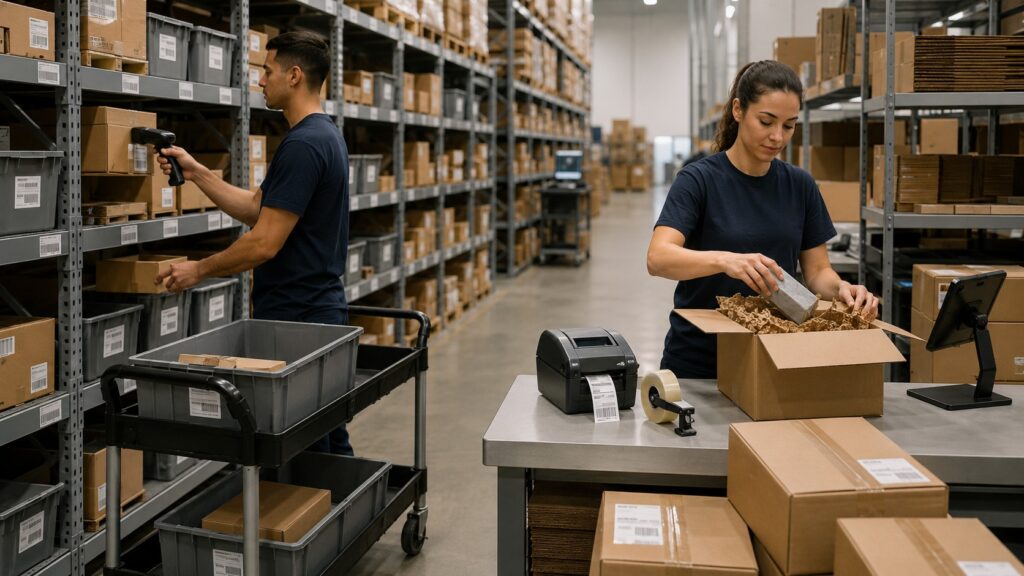
A business sends inventory to the 3PL’s warehouse and connects its ordering systems with the provider’s technology. As orders are placed, the 3PL receives the information, picks and packs the products, coordinates shipping, updates inventory records, and handles returns according to the agreed process.
How to choose a 3PL provider?
Start by confirming that the provider can support your products, order volume, sales channels, geographic reach, and any specialized handling or compliance requirements. Then compare its warehouse network, technology integrations, reporting capabilities, pricing structure, scalability, returns process, service standards, and experience with businesses similar to yours.
How to manage 3PL performance?
Set clear service-level expectations and track relevant metrics, such as order accuracy, on-time shipping, inventory accuracy, receiving time, return processing, and fulfillment cost. Regular reporting, shared data, scheduled performance reviews, and a clear process for resolving recurring issues help keep the partnership accountable and aligned with business priorities.
What is the difference between 3PL and 4PL?
A 3PL primarily performs day-to-day logistics activities, such as warehousing, fulfillment, and transportation. A 4PL operates at a broader strategic level, coordinating the entire supply chain and potentially managing several 3PLs and other logistics partners on the client’s behalf.
Why is 3PL important?
3PL logistics allows businesses to increase fulfillment capacity without building and staffing their own logistics infrastructure. It also provides access to established warehouse networks, carrier relationships, specialized expertise, and connected technology that can support growth, seasonal demand, and expansion into new markets.
What are the benefits and drawbacks of a 3PL?
The main benefits include lower infrastructure investment, flexible capacity, logistics expertise, advanced technology, stronger shipping rates, and more time for internal teams to focus on other business activities. Potential drawbacks include less direct control over daily operations, reliance on an outside provider, integration challenges, contractual commitments, and additional fees if pricing and service requirements are not clearly understood.
What is a 3PL agreement?
A 3PL agreement is the contract that defines how the provider will manage the client’s logistics operations. It typically covers the services included, pricing and additional charges, performance standards, inventory responsibilities, liability, insurance, data access, reporting, contract length, dispute procedures, and termination terms.
3PL vs. in-house logistics: What’s better?
The better option depends on the company’s volume, resources, growth plans, and need for operational control. In-house logistics may suit businesses with stable demand and the resources to manage their own facilities, while a 3PL is often more practical when demand fluctuates, internal capacity is limited, or the business wants to expand without making a large infrastructure investment.
How do 3PL warehouses handle returns?
A 3PL receives returned products, verifies them against the return authorization, inspects their condition, and records the outcome in the inventory system. Depending on the client’s rules, an item may be restocked, repackaged, repaired, returned to the manufacturer, recycled, or disposed of, with each step documented through the agreed reverse logistics process.
Looking for a 3PL You Can Trust?
Outsourcing logistics is not about letting go of control; it is about placing it with people who take it seriously. The right 3PL partner does not just store and ship. They deliver what others promise.
Ready to talk fulfillment? Get in touch with ACT.