TL;DR
- Choosing a 3PL comes down to matching a provider’s services, technology, and industry experience to how your business actually runs and where it is heading, rather than picking on price alone.
- The strongest providers give you real-time visibility through a self-serve customer portal and handle EDI and retail compliance in-house, which speeds onboarding and prevents the chargebacks that erode margins.
- Weigh providers on the lowest total cost of ownership and their capacity to scale through peak season with both space and trained staff, not on the cheapest headline rate.
The Key Criteria to Look For When Choosing a 3PL
Once you know what you need, you can evaluate providers against a consistent set of criteria. The factors below are the ones that most often separate a 3PL that fits from one that does not, so weigh each against your own priorities.
1. Start by Defining What You Actually Need From a 3PL
Before comparing providers, get specific about your own operation. Map your average order volume and how much it swings, your product type and any special handling it needs (cold storage for food-grade goods, hazmat protocols for lithium batteries), and where your customers are concentrated. Then fix the goal: lower cost, faster delivery, fewer errors, or room to grow. The right fit for a high-SKU ecommerce brand is often wrong for a supplier moving pallets into retail DCs, so start from your requirements.
2. Match Their Service Range to Your Real Requirements
The widest service list is not automatically the best fit. Pin down what you want to outsource, then confirm the provider does it well, not as an afterthought. If you sell across ecommerce, retail and B2B, and marketplaces, look for genuine omnichannel depth in one place, including Amazon FBA, FBM, and SFP. Ask about the extras that quietly matter, like kitting and assembly, returns, and value-added work. And check whether transportation is owned or brokered, since many capable 3PLs broker freight through carrier partners rather than owning trucks.
3. Look for Proven Experience in Your Industry and Products
A 3PL that understands your category spots problems before they cost you. Apparel, cosmetics, electronics, renewable energy, and home goods each carry their own routing rules, handling needs, and seasonal rhythms, so ask for a track record with products like yours. References matter more than sales decks: talk to current clients about real order accuracy and how the provider communicated when something went wrong. Cultural fit belongs here too. An employee-owned 3PL, where the people on your account hold a stake in the company, brings accountability that a transactional vendor does not.
4. Dig Into Their Technology, Systems, and Visibility
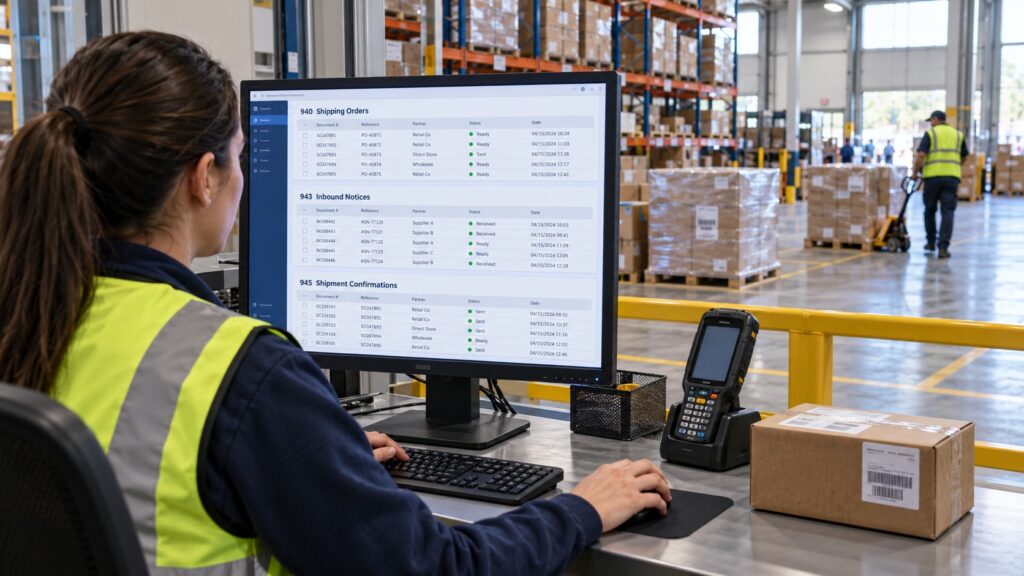
Technology is where good 3PLs separate from average ones. Look for a modern warehouse management system that syncs cleanly with your ecommerce platform or ERP, so inventory and orders stay accurate without manual fixes. Just as important is real-time visibility: the best providers give you a self-serve customer portal with live tracking, inventory updates, and proof of delivery, so you are not emailing your rep for a status every day. Ask which platforms they integrate with, how their reporting maps to your KPIs, and whether they use automation to hold accuracy at volume.
5. Confirm Their EDI and Retail Compliance Capabilities
If you sell into big-box retailers or department stores, retail compliance can make or break the relationship, and it is where many providers fall short. Selling into a retailer’s distribution centers usually means trading EDI documents such as the 943 and 945 transaction sets, meeting strict routing-guide and labeling rules, and avoiding the chargebacks that pile up when paperwork slips. Ask whether the 3PL handles EDI in-house or leans on a third party, since in-house control usually means faster setup and fewer errors.
6. Check They Can Scale With You Through Peak Season
The right 3PL absorbs your growth rather than buckling under it. Ask how they handle seasonal spikes like Black Friday, and look for both physical and staff headroom: space is useless without the trained labor to move product through it. Since warehouse labor is often the largest cost in fulfillment, a provider’s ability to flex its workforce up for peak, then back down, is a real differentiator. Confirm they can add SKUs, open new channels, and support same-day requirements where a retailer demands it.
7. Understand Their Pricing and the True Cost to You
Price matters, but the cheapest quote rarely wins over time. Ask for a complete rate card broken down by every component: setup, storage, receiving, pick-and-pack, and shipping, plus surcharges for special handling. The goal is to surface hidden fees before they surface on your invoice. Weigh that against the lowest total cost of ownership, not the lowest headline rate: a provider that loses inventory or misses deadlines costs you far more than a few cents saved per pick. Vague pricing is itself a warning sign.
8. Review Their Warehouse Locations and Network Reach
Where a provider’s warehouses sit shapes your shipping speed and cost. Positioning inventory near your main customer base shortens transit times and trims parcel spend, and reach across the major US markets lets you place stock strategically as you grow. Ask where their facilities are, which markets they can expand into through owned space or partner sites, and how they would map your inventory. For suppliers feeding retail DCs, proximity to those centers and the right freight lanes matters as much as proximity to consumers.
9. Weigh Communication, Onboarding, and Partnership Fit
The best 3PL relationships feel like an extension of your team, not a vendor you chase. Gauge how they communicate: regular status updates, an honest heads-up when there is a problem, and quick answers when you reach out. Then dig into onboarding, since a smooth launch signals disciplined operations while a chaotic one previews what is to come. Ask how long implementation takes and what they need from you. Finally, think long term: you want a stable, experienced partner that stays dependable for years.
10. Assess Their Stability and Disruption Readiness
The best 3PL relationships last for years, so weigh whether a provider will still be dependable when conditions get hard. Ask how it plans for disruptions, from severe weather and carrier failures to sudden demand spikes, and whether it insures your inventory while the goods are in its care. Financial stability and longevity matter just as much: a provider with a long operating history and a healthy balance sheet is far less likely to leave you scrambling for a new partner mid-season. An established, financially sound operator also has more reason to protect the relationship over the long term.
The Best 3PL for Ecommerce, Small Business, or Retail
There is no single best 3PL provider, only the best 3PL for your business. The best 3PL for ecommerce has deep marketplace and cart integrations, fast order processing, and clean returns. The best 3PL for a small business is genuinely willing to grow with you, with pricing and flexibility that fit your current stage. For retail and B2B suppliers, the best 3PL in the USA lives and breathes retail compliance, EDI, and distribution-center routing. Match the provider’s strengths to your channel and the shortlist gets short fast.
How to Choose a 3PL FAQs
What questions should you ask a 3PL before signing?
Ask for a fully itemized rate card, references from clients your size and in your industry, the systems they integrate with, and their real order accuracy and on-time numbers. Ask how they staff for peak, how long onboarding takes, and how they handle problems when something goes wrong. Specific answers signal a disciplined operation.
How long does it take to onboard with a new 3PL?
Onboarding usually runs from a few weeks to a couple of months, depending on your SKU count, sales channels, and how much integration and retail compliance setup is involved. Providers that handle EDI and integrations in-house tend to move faster. Ask for a realistic timeline and what they need from you.
How do you know if a 3PL can handle your industry?
Look for a documented track record with products like yours, since apparel, cosmetics, electronics, and renewable energy each carry specific handling, routing, and compliance demands. Ask for references in your vertical, and probe how they manage the details that trip up generalists, such as lot tracking, hazmat handling, or retailer routing guides.
What certifications should a 3PL have?
It depends on what you sell. Food-grade and consumable products call for a partner that meets FDA and Current Good Manufacturing Practice standards, with strong audit trails and lot tracking. Products with batteries or other regulated materials need proper hazmat handling. Beyond that, ask about warehouse health-and-safety practices and how they protect your data.
Should you choose a 3PL near your customers or suppliers?
For most consumer brands, positioning inventory close to your main customer base shortens delivery times and lowers parcel costs. For suppliers moving goods into retail distribution centers, proximity to those DCs and the right freight lanes often matters more. The strongest answer is usually a provider with reach across several major markets.
How do you measure and manage 3PL performance?
Set clear KPIs and hold the relationship to them: order accuracy, on-time shipping, inventory accuracy, receiving speed, and return-processing time. Ask for regular reporting against those metrics, ideally through a portal you can check yourself, plus scheduled business reviews. The best partners are transparent about performance over time and treat missed targets as problems to fix together.
What are red flags to watch for when choosing a 3PL?
Be cautious with pricing well below the market, since it often hides service gaps that cost more later. Vague or overcomplicated pricing, reluctance to share references or performance data, no self-serve visibility, and a claim to do absolutely everything are all warning signs. So is slow, evasive communication during the sales process.
Looking for a 3PL That Checks Every Box?
For more than 30 years, ACT Fulfillment has run retail, ecommerce, and omnichannel programs for suppliers and brands nationwide, with in-house EDI, real-time visibility, and the labor to scale through peak. Because we are employee-owned, the people running your account own part of the company, so accountability is built in. If you are weighing your options, we can walk you through how we would handle your operation. Talk to ACT about your fulfillment or explore our 3PL services.