Every channel gets what it needs. Your inventory stays connected.
ACT delivers omnichannel fulfillment solutions from one shared inventory pool, helping reduce split stock, simplify oversight, and keep every channel moving with fewer handoffs.
Discover more about our services
DTC & B2B: Omnichannel Fulfillment Services Built Around One Inventory Pool
Brands selling across multiple channels often end up managing multiple 3PLs, split stock, and inconsistent execution.
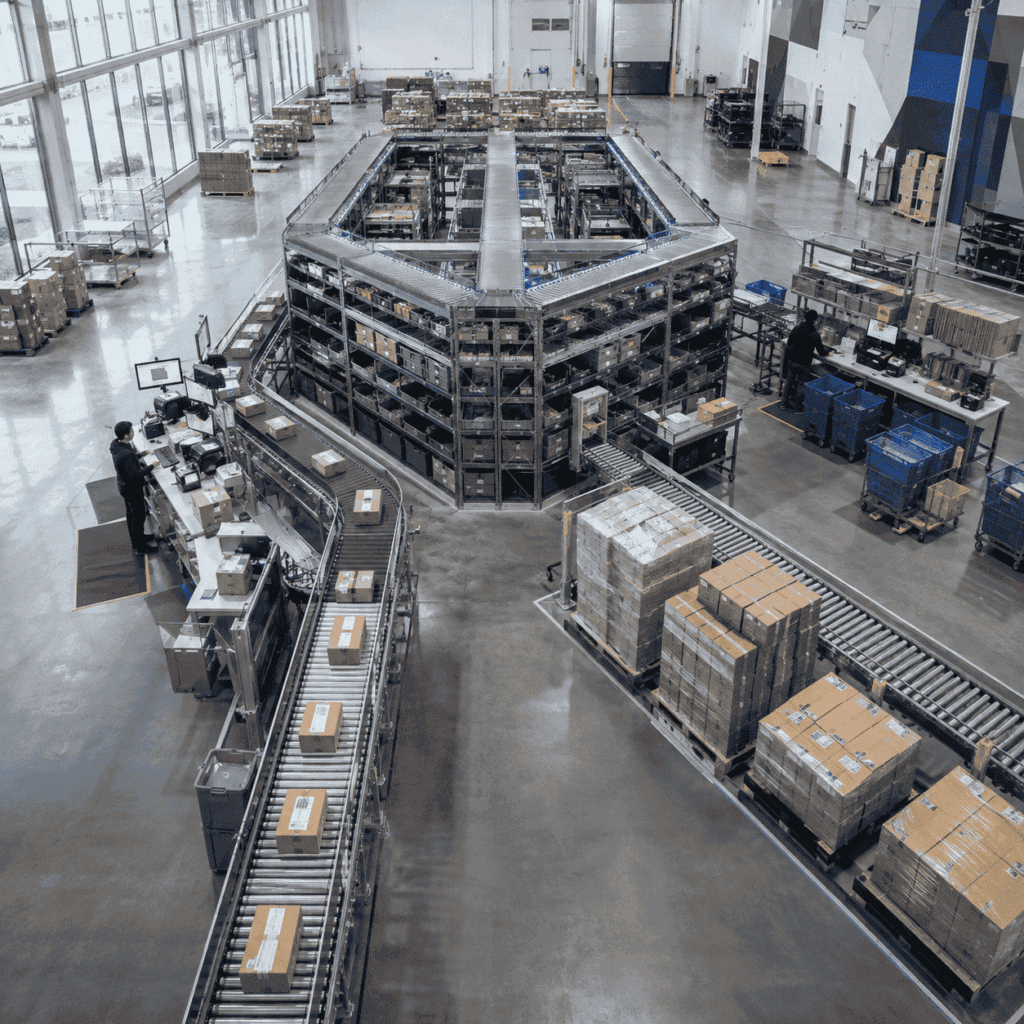
ACT Fulfillment runs all order types from the same operation, so inventory stays available across markets while each order is prepared to meet its own pack-out, routing, and shipping requirements.
The upstream workflow stays connected. The downstream requirements stay channel-specific.
Managing multiple channels from separate providers?
Talk to ACT Fulfillment about building one consolidated omnichannel program.
An Omnichannel Fulfillment Provider That Turns Channel Growth Into Smooth Execution
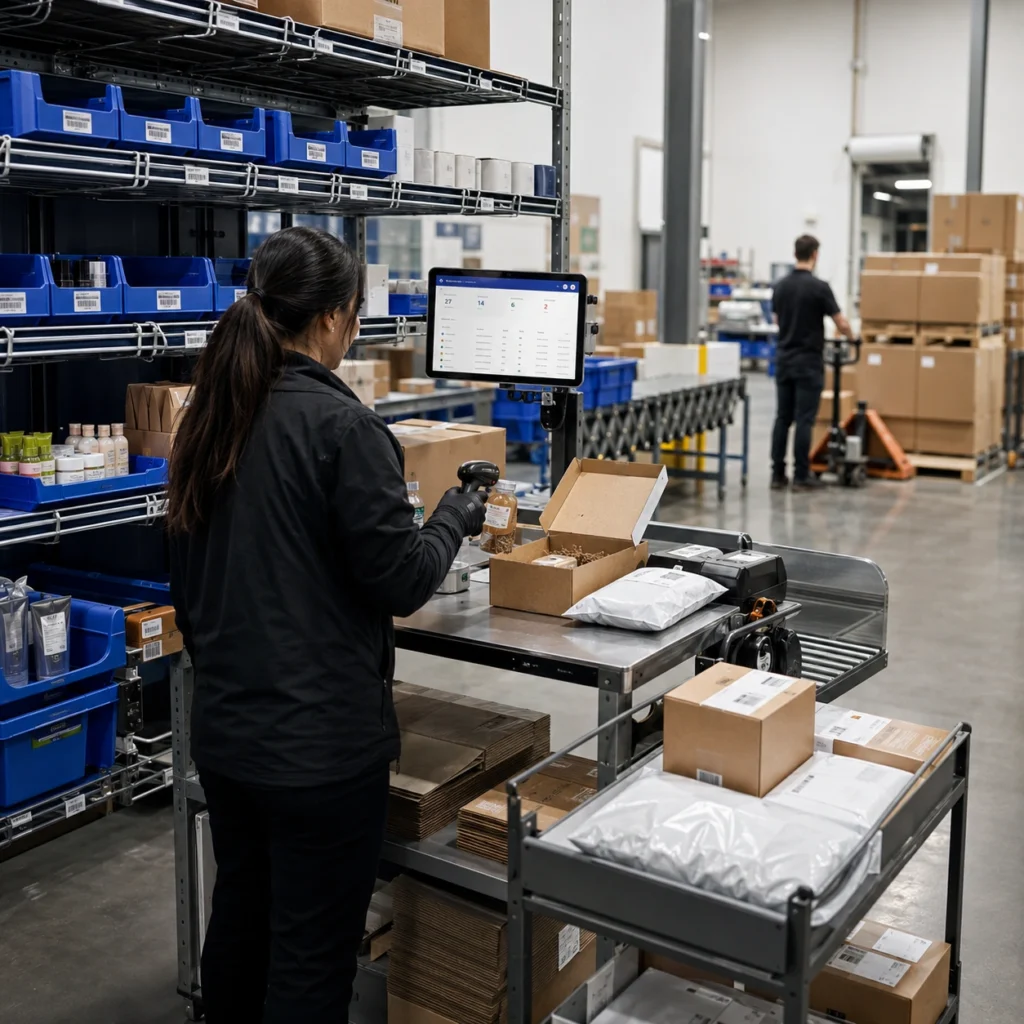
At ACT Fulfillment, every order moves through a fully RF-driven picking process: paperless, accurate, and tracked from initiation to outbound.
With ACT, omnichannel fulfillment does not mean managing separate providers, disconnected stock, or competing workflows. Your channels stay connected through one operation, with order handling adjusted by destination and requirement.
Improve Operational Flexibility
When every channel runs through a separate provider or inventory pool, small changes can create big disruptions. ACT helps brands keep B2B and DTC/eCommerce fulfillment connected through one operation, while each order still follows the pack-out, routing, shipping, and delivery rules required by its destination.
That gives your business more room to adapt when order profiles shift, retailer requirements change, or one channel suddenly needs more inventory.
Make Better Use of Shared Inventory
ACT Fulfillment treats inventory as available to all channels simultaneously. Instead of locking stock into separate silos, brands can fulfill from a shared inventory pool while the outbound process diverges only where needed.
In practice, that helps reduce split stock, improve inventory availability, and give every channel access to the product it needs without creating unnecessary operational complexity.
Protect Accuracy With Connected Systems
ACT’s omnichannel 3PL services are supported by systems that keep orders, inventory, and warehouse teams working from the same operational picture, so account teams can respond faster when priorities, volumes, or customer requirements change.
For brands managing multiple order types, that means fewer manual workarounds, clearer data, and a stronger operational foundation for fulfillment across channels.
Looking for an omnichannel 3PL company that can support your program as your channel mix grows? Talk to our team.
Three Decades of Delivery: Why Brands Choose ACT as Their Omnichannel Fulfillment Company
At ACT, multi-channel fulfillment is not a recent add-on. It is how the operation is built to support brands selling through DTC, marketplaces, and B2B channels.
Founded in 1994, ACT brings more than 30 years of fulfillment experience to complex distribution programs.
For us, omnichannel fulfillment is not just a technology promise. It is a daily operational discipline, with every channel running from the same floor, with the same team, to the same standard.
If your current setup is falling short, through split inventory, inconsistent execution, or a provider that has outgrown your program, ACT’s supply chain analysis gives you the operational clarity to understand where the gaps are before making any commitments.
Here is what that track record looks like in practice:
Omnichannel Fulfillment Solutions FAQs
Omnichannel fulfillment is the practice of fulfilling orders for every sales channel, DTC, marketplaces, and B2B, from one connected operation rather than separate providers or siloed stock. At ACT, that means running all order types from the same floor with one shared inventory pool. The upstream workflow stays connected, while each order still follows the pack-out, routing, and shipping rules its destination requires. The result is inventory that stays available across channels, fewer handoffs, and consistent execution as your channel mix grows or shifts.
Multichannel fulfillment means selling and shipping through several channels, often with each one running on its own inventory, provider, or process. Omnichannel fulfillment connects those channels: DTC, marketplace, and B2B orders draw from the same inventory and move through one operation, while each order still follows the rules of its destination. At ACT, a retail replenishment order and a DTC parcel can come from the same stock on the same floor, so no channel is left waiting on inventory that sits in another provider’s warehouse.
ACT supports fulfillment across DTC and eCommerce, marketplaces, and retail or wholesale channels from the same program. On the eCommerce side, ACT integrates with Shopify, Amazon, Walmart, BigCommerce, Magento, and other major platforms, with orders picked through automated workflows and packed for same-day shipping when a channel requires it. For retail and wholesale, in-house EDI professionals manage store replenishment, drop-ship, and case or pallet-based shipments. Amazon selling programs are supported as well, so your marketplace, DTC, and B2B orders can run side by side.
Yes. ACT runs DTC, marketplace, store replenishment, and wholesale orders from the same operation, with one workforce and one inventory that every channel can draw on. Stock is not split by channel in advance. Instead, the channel determines how each order is handled: its order size, delivery requirements, packaging, shipment method, and the rules for handling shortages. That way, a spike in retail replenishment or a busy DTC week can be met from the same stock, without transferring inventory between providers.
ACT supports Amazon sellers across FBA, FBM, and Seller Fulfilled Prime, where timing, labeling, inventory accuracy, and shipping speed all matter. That includes FBA inbound preparation to get shipments ready for Amazon’s fulfillment centers, FBM order execution direct to the customer, and SFP workflows that require tight coordination across preparation steps, fulfillment rules, and shipping requirements. Because these programs run inside the same operation as your DTC and B2B orders, ACT can keep preparation and shipping aligned to each program’s rules without splitting your inventory across providers.
ACT maintains in-house EDI professionals who build and manage custom solutions, so changes are handled without pushing that complexity back onto your team. When retailer rules shift or a platform updates its requirements, ACT has the operational and EDI support to adjust the workflow directly, and its own people are accountable for the fix rather than a third-party vendor. That responsiveness is part of why client relationships with ACT hold through growth and change.
Start with whether the provider runs every channel from one inventory pool or keeps separate silos, and whether it can meet each channel’s requirements, from DTC pack-out to retailer EDI and case or pallet shipments. Ask who builds and maintains the EDI connections, since that decides who is accountable when a retailer changes its rules. Check how it supports Amazon programs, how the account team communicates when priorities shift, and how long its client relationships last. ACT covers these within one operation, with in-house EDI and more than 30 years in fulfillment.
Ready to consolidate your omnichannel fulfillment program? Contact ACT Fulfillment today.
Cartons Shipped Daily
Direct to Consumer Daily Orders
Warehouse Square Feet
Dedicated Employees